Kurpfalz News
Strong role models – strong children: Prof. Dr. Manuel Vermeer as a guest
China and India are rapidly changing the world order – but what role will remain for Europe?
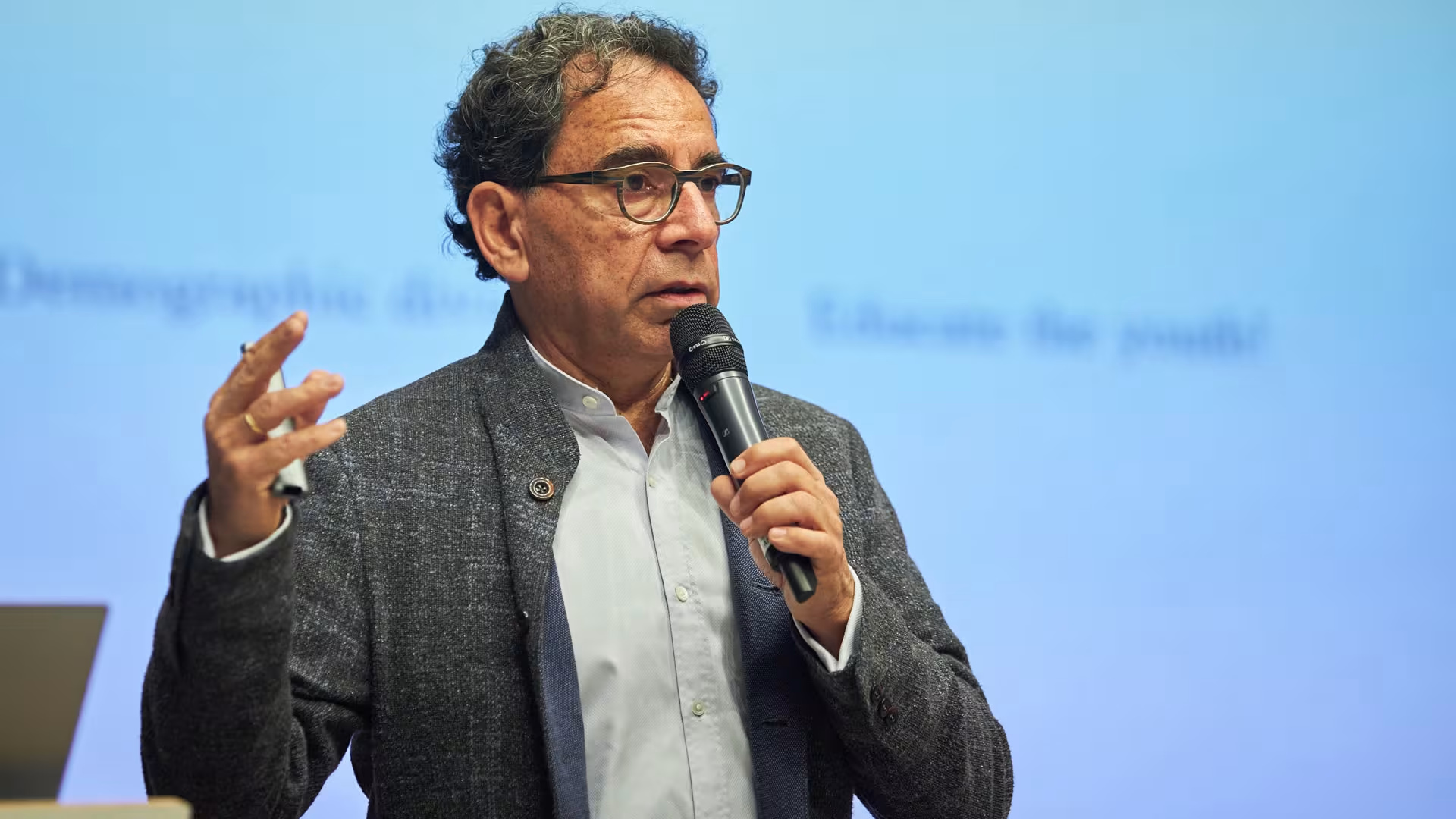
A highly topical lecture by Prof. Dr. Manuel Vermeer at the Kurpfalz Internat impressively demonstrated how different the strategies of global actors are and why young people in particular need to think internationally now.
At the end of November, the students of grades 10-12 at the Kurpfalz Internat had the honor of welcoming the renowned Asia expert Prof. Dr. Manuel Vermeer for a lecture. Under the title “China, India – What About Us?” Prof. Vermeer provided a fascinating insight into the geopolitical and economic developments of the two emerging superpowers, India and China, and provocatively posed the question of whether Europe is losing its connection.
The Role of China
Prof. Vermeer began his lecture with an impressive analysis of China. He explained how the country is massively investing in artificial intelligence and even monitoring the concentration levels of learners using brain waves – a scenario that seems unimaginable in Europe. China’s strategy of gaining influence through financial means instead of military power runs through many areas. A curious example: The Barbie movie had to take China’s geopolitical claims into account, as China acts as the largest financier and market for Hollywood. Furthermore, China is pursuing clear, long-term goals, whether through control over the North Pole, the Taiwan issue, or the construction of gigantic dams that could even influence the Earth’s axis.
And India?
India, on the other hand, impresses with its demographic dynamism. With 1.5 billion people, half of whom are under 25 years old, the country offers a young, energetic population that produces world-leading managers and entrepreneurs. More than 130 so-called “unicorns” demonstrate India’s innovative strength. At the same time, India faces challenges such as corruption, religious fanaticism, and geopolitical tensions, particularly in the strategically important Strait of Malacca.
What does that mean for Europe?
But what do these developments mean for Europe? Prof. Vermeer warned that Europe is at risk of falling behind in many areas. While China and India pursue long-term strategies, Europe lacks a clear geopolitical vision. Germany, according to Vermeer, builds electric cars and “puts an iPad inside,” while China turns the iPad into a vehicle. Europe’s dependence on China, particularly for rare earths, makes the continent vulnerable. Vermeer emphasized that Europe must seize the opportunity to avoid being left behind and recalled the Chinese proverb “Wei Ji,” which describes “crisis” as both danger and opportunity at the same time.
The young generation
Professor Vermeer’s appeal to the young audience was particularly compelling: “Do internships in Asia, get to know the cultures, understand their strategies!” In a globalized world, it is essential to look beyond the European horizon. Professor Vermeer’s lecture was not only an eye-opener to the dynamic developments in Asia but also a reminder that knowledge and education are the keys to keeping up in a rapidly changing world.
The Kurpfalz boarding school is proud to welcome such high-profile speakers and looks forward to providing students with exciting insights into the major questions of our time in the future as well.
Contact us or request a brochure
Would you like to find out more? Contact us now or request our free brochure.