Kurpfalz News
Excursion to the Messel Pit
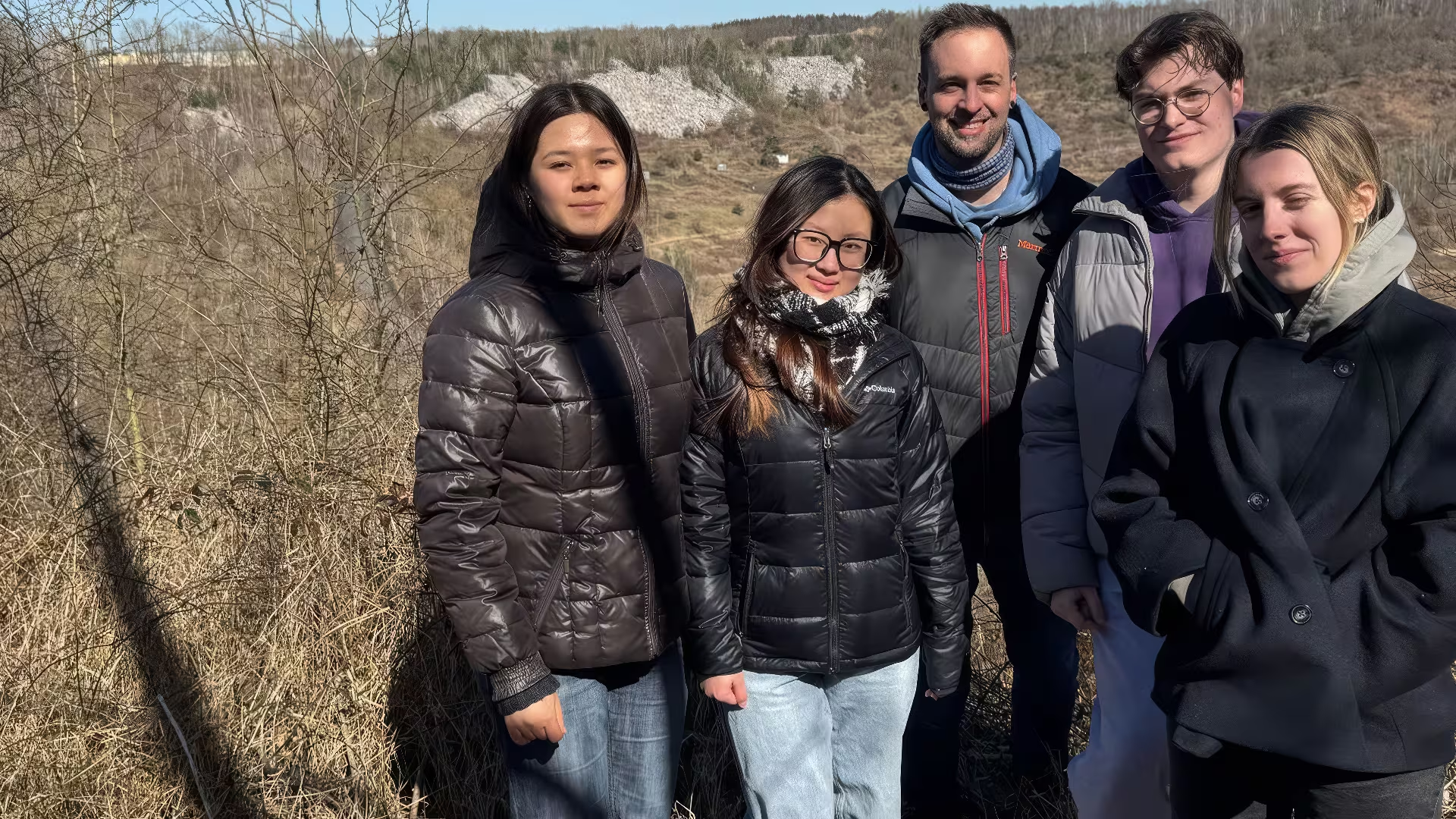
On March 18, 2025, the geology course K25, accompanied by Dr. Hoffmann, undertook an excursion to the Messel pit, one of the most significant fossil sites in the world and a UNESCO World Heritage Site since 1995.
About 48 million years ago, during the Eocene, a maar lake was formed through volcanic activity at the site of today’s Messel pit. In this deep crater lake, low-oxygen conditions prevailed, which prevented the decomposition of dead organisms. Over time, organic material accumulated in layers on the lake bottom, forming what is known as oil shale.
From 1859, the region initially extracted bog iron ore. Later, the focus shifted to the extraction of oil shale, from which mineral oil products were obtained through carbonization. This industrial operation continued until the closure of the mine in 1971. Subsequently, in the 1980s, the Messel pit was intended to serve as a landfill. The main reason the pit was ultimately not used as a landfill was the scientific and cultural value of the site. Spectacularly well-preserved fossils were repeatedly discovered in the pit, including complete skeletons of ancestral horses, birds, fish, and insects. These finds provided and still provide important information about life and climate in the Eocene, around 48 million years ago.
Through intense public protest and scientific engagement, the landfill project was halted. In 1991, the pit was placed under monument protection.
The Messel Pit is known for its exceptionally well-preserved fossils. To permanently conserve these finds, larger fossils are embedded in epoxy resin, while smaller ones, like insects, are stored in glycerin. A remarkable find is the nearly complete skeleton of an early primate, indicating a tropical climate that prevailed at the time. Additionally, skeletons of crocodiles were also found, which are displayed in the exhibit. The fossil was reassembled using super glue, so that the individual scales of the animal are clearly visible.
After an introduction to the geological history of the Messel pit, the group, under the expert guidance of a biologist, went into the area. The tour through the extensive site lasted about two hours in total. Stops were frequently made at huts to show the students individual finds – as well as the different rock layers in the pit.
As a highlight, the group – unfortunately not very successfully – searched for smaller fossils of insects or leaf imprints. Once at the bottom, the biologist explained the technique behind the drilling that is used to determine the depth of the remaining oil shale.
At the end of the tour and back at the top, the group visited the museum. A highlight of the excursion for the group was definitely the presentation of fossil finds, including excellently preserved skeletons of prehistoric horses, some of which still contained stomach contents, and in one case even a fetus. These finds highlighted the high biodiversity that existed in the region 48 million years ago.
The excursion to the Messel pit provided the K25 geology course with an in-depth insight into the formation history of oil shale and the industrial use of the deposit. The Messel pit remains an essential place for understanding Earth’s history and the development of life on our planet.
Contact us or request a brochure
Would you like to find out more? Contact us now or request our free brochure.